
Cherokee County Criminal History Checks
A Cherokee County criminal history check starts with the type of event, not with a broad name search. Circuit and District Court files belong with the Circuit Clerk. A city police report stays with the police department that made it. The detention center controls the county booking record, while the Alabama Law Enforcement Agency, or ALEA, maintains the fingerprint-linked statewide history. These records answer different questions. Prepare a full name, date of birth when lawfully available, likely event date, city, and any case, booking, report, or ticket number before contacting a custodian.
The most reliable method moves from the newest local event toward the final court result and then to an identity-based self-review. This order helps distinguish an intake charge from a filed charge. It also shows why a roster entry cannot prove guilt.
- Search Cherokee County Circuit and District Court records through the clerk or paid statewide trial-court service. Ask Centre or Cedar Bluff Municipal Court separately when the matter arose inside those cities.
- Check the sheriff roster for current or recently released custody. Use its Current and Released views and compare the booking date and number.
- Request the incident or arrest narrative from the agency that created it. The jail does not become the custodian merely because it booked the person.
- Follow the case docket to its disposition, sentence, and costs. A prosecutor or grand jury may change the original charge.
- For your own complete Alabama identity record, use ALEA's fingerprint CHRI review and challenge process.
Cherokee County Record Systems Compared
Four Cherokee County record systems may describe the same event without showing the same facts. An officer's report records the call, investigation, and arrest basis. The jail record captures intake, charges received, bond or hold, and release state. A court file records formal prosecution and outcome. ALEA's repository joins reported arrest cycles to fingerprints and later dispositions. A no-result in one channel may mean the record sits in another court, has not yet been reported, is restricted, or needs a different identifier.
The official Cherokee County gateway identifies county offices and forms.
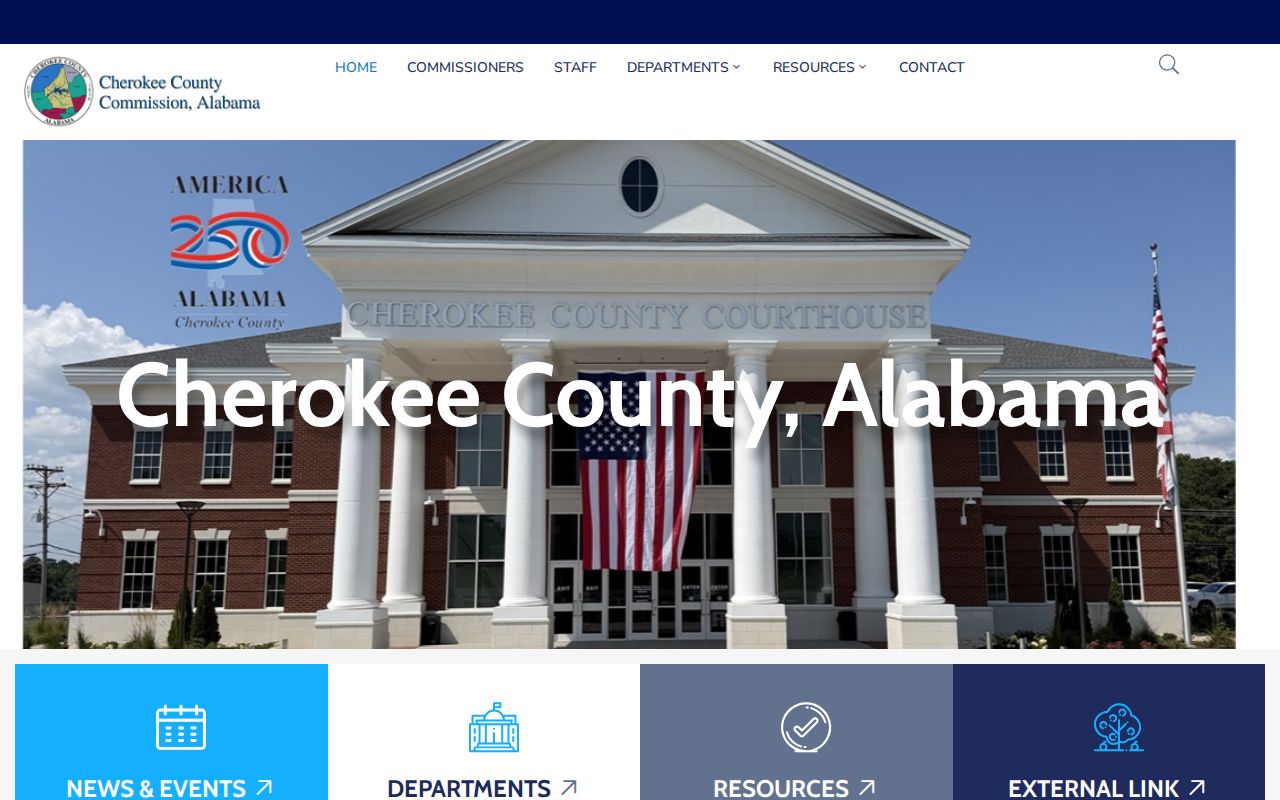
The county gateway is useful for Commission records, but it does not replace the sheriff, court clerk, or city police counter. The correct path depends on who created and still holds the requested record.
| Channel | Best use | Main limit |
|---|---|---|
| Arresting agency | Incident or arrest narrative | Protected facts may be redacted |
| County jail roster | Booking and custody snapshot | Not the final court result |
| Trial court file | Filed charge, docket, and disposition | Municipal files can be separate |
| ALEA CHRI | Your fingerprint-linked Alabama history | No unrestricted public name search |
Official Background Checks in Alabama
Alabama has no unrestricted public name-only repository search. ALEA's Alabama Background Check System is credentialed for qualifying entities. A person reviewing their own record instead submits Form 46, fingerprints, a current photo-identification copy, and the required payment. The process is identity based. It is designed to return Alabama criminal history attached to the submitted fingerprints and provides a challenge route when the subject believes the record is wrong or incomplete.
The ALEA Criminal Justice Information Services overview shows how the state divides criminal-record, fingerprint, registry, and incident-report functions.
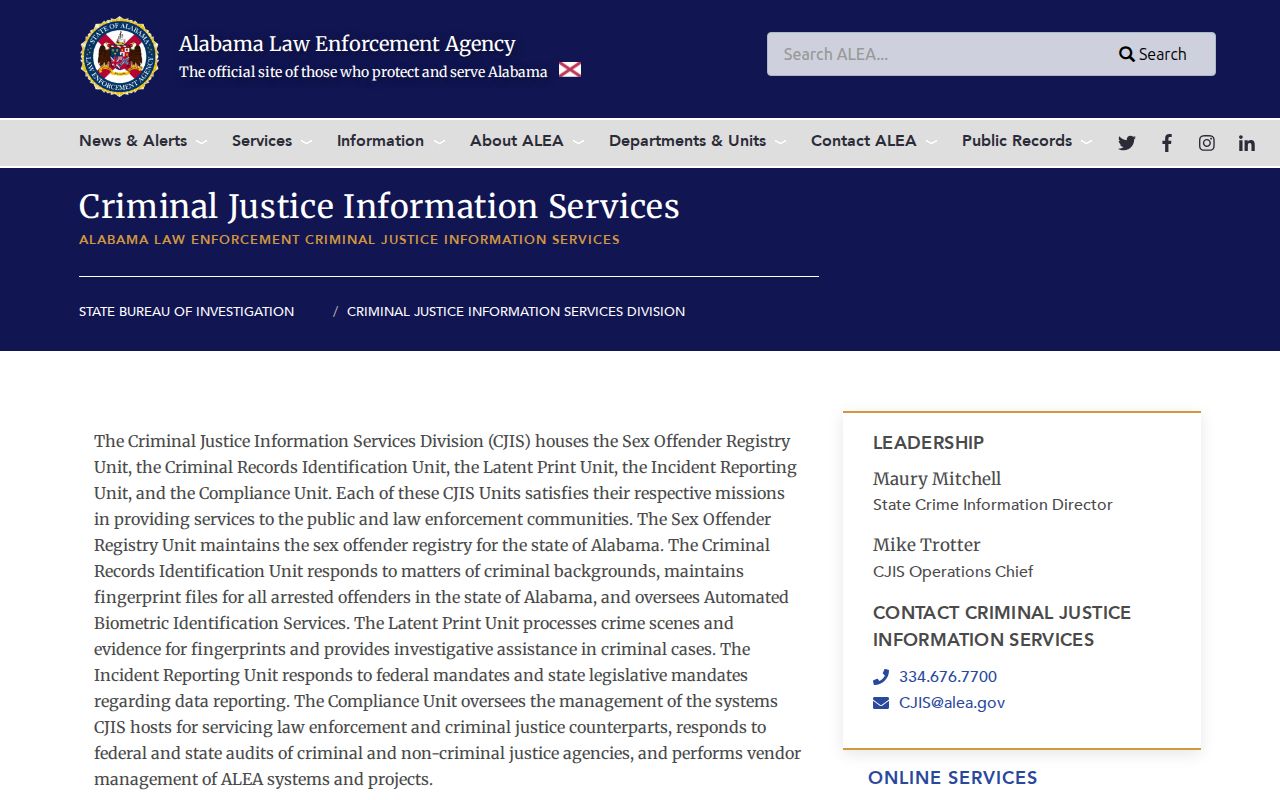
That division of work explains why a Cherokee County court copy and an ALEA history are related but not interchangeable.
The ALEA Criminal Records Identification Unit explains its repository and fingerprint-file duties.
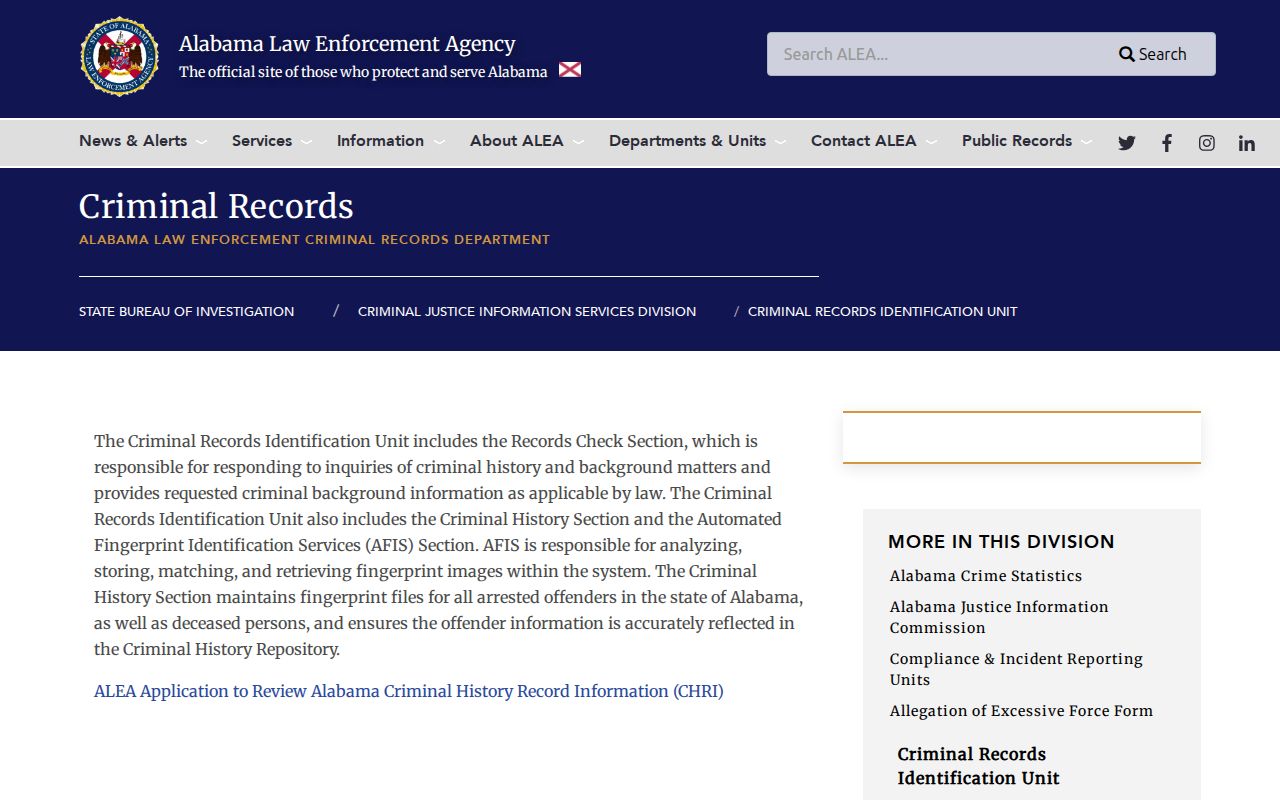
A fingerprint match reduces the risk of confusing people who share a name. It does not supply every scanned pleading in a Cherokee County case file.
Cherokee County Fingerprint Record Review
The Cherokee County Detention Center publishes fingerprint appointments from 8:00 a.m. to 4:00 p.m. on weekdays for $50 per person, paid by cash or check. Call 256-927-6435 first. Staff should confirm whether the appointment will produce the FBI FD-258 card or approved AFIS printout that ALEA expects for the intended request. A fingerprint service and a completed criminal-history review are separate products.
The ALEA self-review instructions set out the CHRI packet, identification, payment, and delivery routes.
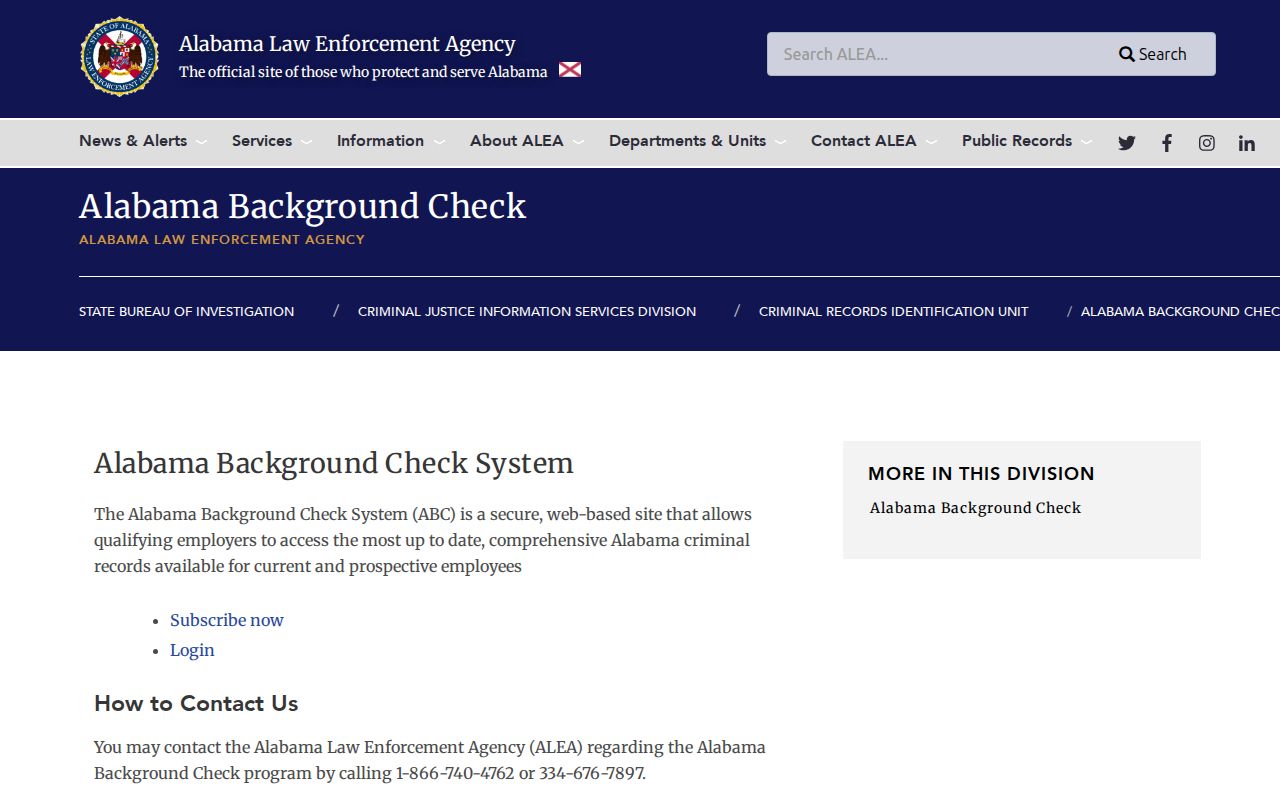
The base ALEA review costs $25, and an additional copy requested with the packet costs $5. Payment is by cashier's check or money order. The FBI's own Identity History Summary is a separate federal subject-review product with an $18 charge.
| Service | Fee | Key requirement |
|---|---|---|
| Cherokee fingerprint appointment | $50 | Confirm card and purpose by phone |
| ALEA own CHRI review | $25 | Fingerprints, application, and photo ID |
| ALEA additional copy | $5 | Order with the base packet |
| FBI own history summary | $18 | Fingerprints and signed request |
Note: Confirm current forms and fees before sending fingerprints or identity documents to any agency.
Kinds of Criminal Records
Cherokee County criminal records are grouped by function. An incident report describes what officers were told or observed. An arrest record documents custody, while a booking profile reflects jail intake. A criminal court file follows prosecution through hearings and judgment. ALEA CHRI is a fingerprint-linked state chronology. Warrant, supervision, prison, and registry systems add narrower facts that may never appear in a general county search.
Each record also has a separate custodian. Cherokee County sheriff deputies, Centre Police, Cedar Bluff Police, Leesburg Police, ALEA troopers, campus officers, conservation officers, and federal park officers retain their own source reports. The Circuit Clerk holds Circuit and District Court cases and warrants. Municipal clerks retain their local cases. The detention center houses bookings from the county and its towns.
- Incident and arrest reports: agency narratives, alleged offenses, evidence, and protected participant details.
- Booking records: booking number and time, intake charges, photograph, bond or hold, and custody state.
- Court files: complaint or indictment, events, motions, hearings, disposition, sentence, and financial entries.
- Repository records: fingerprint-linked arrest cycles, agencies, charges, and reported outcomes.
- Custody and supervision files: county jail, ADOC prison, probation, parole, and registry information with different public limits.
Cherokee County Custody Record Paths
The sheriff roster answers whether someone is in the Cherokee County Detention Center or appears in its released view. It can be sorted by name or booking date and searched by first or last name. Published list fields include the booking photograph, name, booking number, booking date and time, charge text, and a profile link. The roster is free, but it is not a certified arrest report and does not promise the final charge or disposition.
After transfer, the right locator changes. The ADOC Inmate Search uses an exact six-digit AIS number or first and last name for current state prisoners.
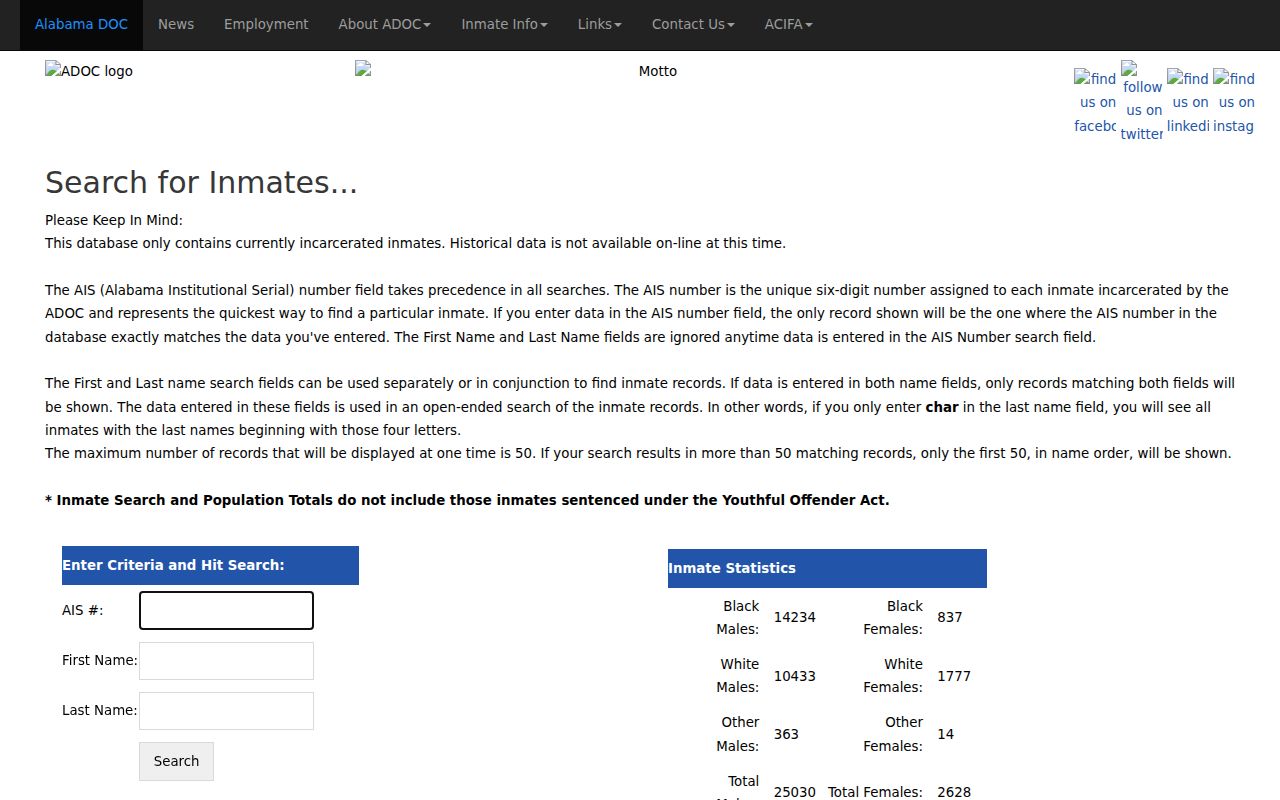
ADOC excludes historical online data and Youthful Offender Act inmates and caps name results at 50. Federal custody from 1982 forward belongs in the Bureau of Prisons locator. VINE supplies release, transfer, and escape notifications, but it does not certify a booking record. A zero bond on the county roster can also reflect a judge-order or fine hold, so it does not always mean immediate release is available.
Cherokee County Criminal Records: What They Contain
Record fields change as a case moves. A booking entry uses the charges received at intake. The prosecutor may file a different count, and the court docket may later show dismissal, conviction, acquittal, or another outcome. ALEA depends on reports returned by agencies and courts. Compare identifiers and dates before treating entries as one event, especially when names are common.
| Name and identifiers | Legal name, aliases, birth date, descriptors, and SID or FBI numbers where the specific system lawfully displays them. |
|---|---|
| Arrest and booking | Agency, arrest date, booking number and time, intake charge, bond or hold, and custody or release state. |
| Court charge | Case number, filed offense, statute, class, judge, attorneys, hearings, warrants, and docket events. |
| Disposition | The outcome of each charge, such as dismissal, conviction, acquittal, or a prosecutor's formal decision not to continue. |
| Sentence and costs | Custody, probation, fines, costs, restitution, and related orders when part of the public file. |
| Custody or supervision | County jail status, current state or federal prison location, or releasable probation and parole information. |
A few court terms help when reading a Cherokee County criminal case.
- Disposition
- The outcome entered for a charge.
- Nolle prosequi
- The prosecutor's formal decision not to continue a charge.
- Indictment
- A grand jury's felony charging instrument.
- Docket
- The chronological register of case events.
- Expungement
- Alabama's statutory process for removing eligible records from ordinary public access.
Cherokee County Warrant Record Checks
The sheriff's Most Wanted page is a selected publication, not a complete warrant database. It can be sorted by name or date and has an Arrested view, but a missing name is not proof that no warrant exists. Circuit and District Court warrants connect to the Circuit Clerk's Warrants division. A Centre or Cedar Bluff bench warrant may instead belong with the municipal court that issued it.
To resolve your own suspected warrant, call sheriff non-emergency at 256-927-3365 and the Circuit Clerk at 256-927-3637 for court routing. Ask the issuing municipal court when the matter is city based. A failure to appear or failure to pay can require a court appearance, payment, bond, or recall order. Only the issuing court can confirm that the warrant has been cleared. Do not use a crime-tip form as a personal clearance channel.
Warrant complaint → judicial review → issuance → law-enforcement service → return entered in the court file.
Note: Sealed, juvenile, and unserved investigative warrants are not expected to appear on a public list.
Alabama Public Access Laws
The Alabama Open Records Act gives Alabama citizens a right to inspect and copy public writings unless another law creates an exception. The right applies to existing public records held by the proper custodian. It does not turn juvenile, sealed, expunged, victim-identifying, or active-investigation material into public data. Alabama also limits dissemination from its fingerprint-based criminal justice repository, which is why the public cannot run an unrestricted ALEA name search.
Key Alabama authorities:
Ala. Code § 36-12-40 grants Alabama citizens access to public writings, subject to statutory exceptions.
Ala. Code §§ 36-12-44 through 36-12-46 support request categories, response procedures, residency proof, and reasonable fees.
Ala. Code § 15-20A-8 controls public sex-offender information and approved search methods.
Ala. Code § 13A-5-6 begins the current felony sentencing ranges used to interpret court entries.
Access does not guarantee release of each line in a file. Ask for a redacted copy when part of a record is protected, and use the agency's written response to understand what was withheld.
Cherokee County Public Record Requests
Cherokee County's Commission form reaches only Commission-controlled records. It is not a universal police, court, or jail request. The 2024 policy requires an Alabama resident to attach reasonable residency proof and submit the standard form in person at 260 Cedar Bluff Road, Suite 103. The county states that unsolicited email requests are not acknowledged. Requests should describe an existing record with enough detail for staff to identify it.
Commission copies cost $0.50 per page, and staff assistance costs $20 per hour in quarter-hour increments. Estimated reasonable fees are prepaid. For an arrest report, call the arresting agency and ask for its own method and fee. The sheriff has not published a dedicated records form or fee schedule, so the Commission prices should not be assigned to sheriff records without confirmation.
Crash reports use a separate ALEA channel. The official Alabama crash-report route charges $15 and limits purchasers under Ala. Code § 32-10-7.
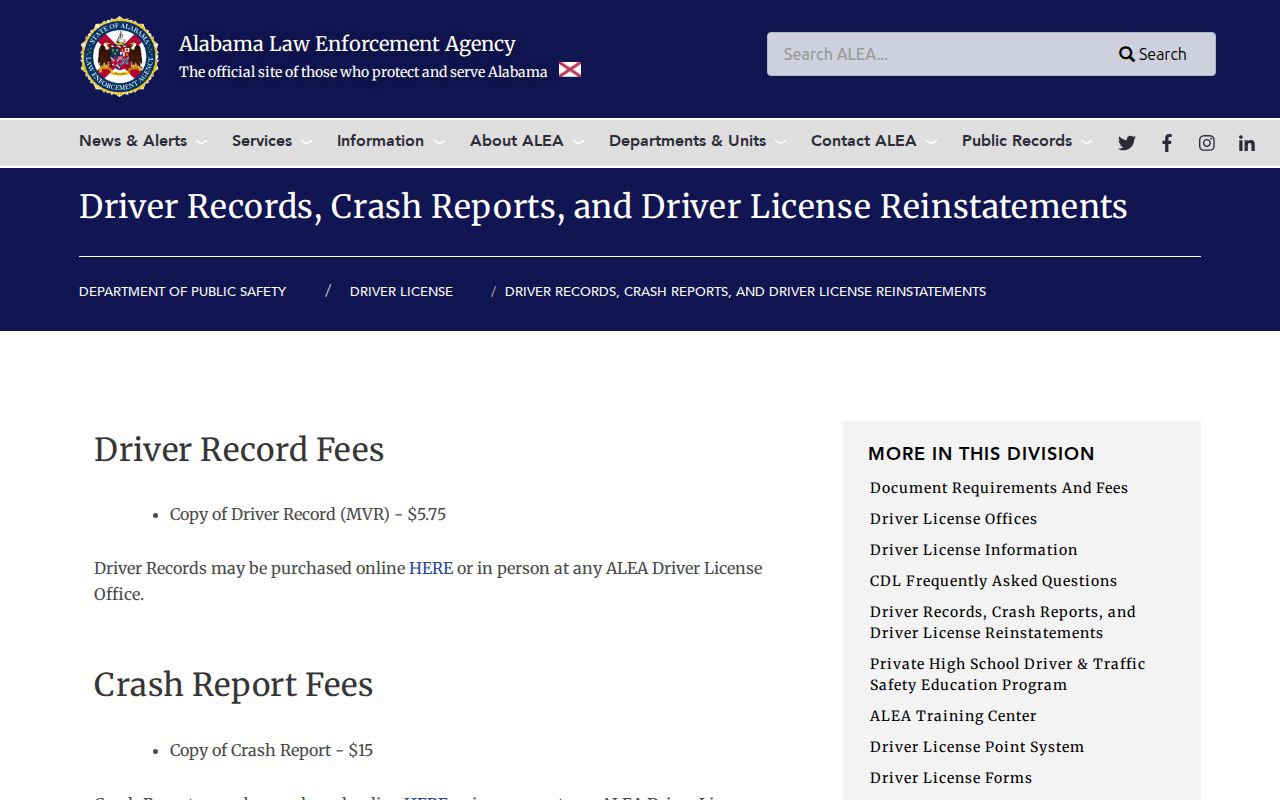
The mailed request asks for driver and crash details, payment in approved funds, and a self-addressed stamped envelope. A crash report is not a general criminal-history product.
Restricted, Sealed & Expunged Records
Juvenile and Youthful Offender records carry special confidentiality rules. Courts and agencies may also redact victim information, medical facts, personal identifiers, and material tied to an active investigation. A blank search result can reflect one of these limits, so it should not be described as proof that a record never existed.
Alabama expungement begins in the criminal division of Circuit Court where the charge was filed. The current CR-65 petition states a $500 filing fee unless substantial hardship is approved. It requires certified local arrest or disposition material and a certified ALEA criminal record, along with identification of each arresting, booking, incarcerating, and court agency that holds the record. Waiting periods and exclusions depend on the exact charge, outcome, diversion, conviction, pardon, and prior history.
After an order, recheck Cherokee County court access and request a new ALEA fingerprint CHRI. If a source still publishes the eligible record, give that source the certified order and exact identifier. Expungement is not the same as a pardon, and it does not promise that every copy outside government control disappears at once.
Cherokee County Supervision Records
Probation and parole are state-run in Alabama. The Alabama Bureau of Pardons and Paroles Centre Field Office serves Cherokee County probationers, parolees, and mandatory-release cases. No public statewide probation name search was located. Start with the court judgment for a probation sentence, ADOC for current state prison custody, and the field office for information it may lawfully release.
The ABPP Centre Field Office listing gives the local supervision address, phone, fax, and public hours.
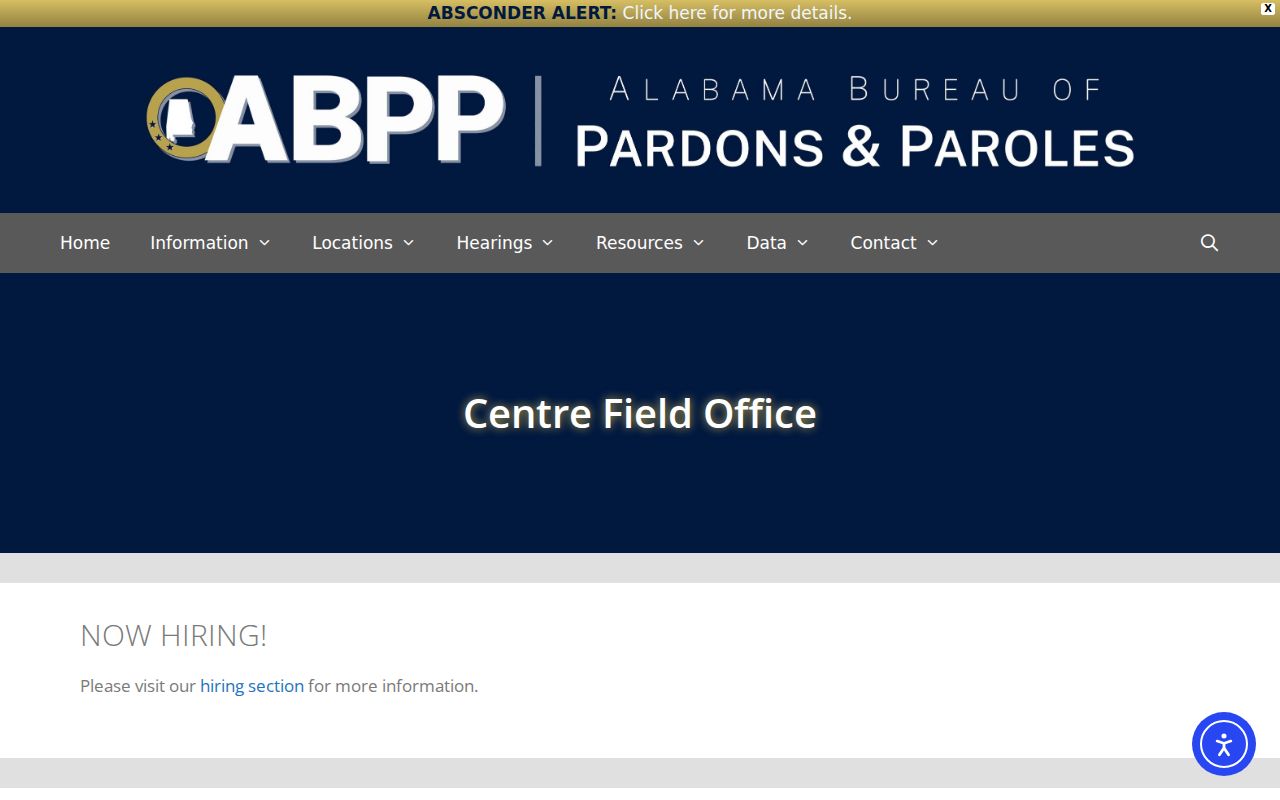
The office is at 203 South River Street in Centre and lists 256-927-5693, with weekday hours from 8:00 a.m. to 5:00 p.m. Conditions, officer assignments, risk data, home contacts, and violation investigations may be restricted. A court controls probation decisions, while the Board controls parole within its legal role.
City-by-City Criminal Records in Cherokee County
Centre, Cedar Bluff, and Leesburg are Cherokee County's three largest incorporated places in the official Alabama Atlas ranking used for this build. Their police departments create their own incident and arrest reports. Centre and Cedar Bluff also have municipal court routes, while Leesburg Police citations and county-level misdemeanors go through Cherokee District Court. All three towns use the county detention center for booking, so a city event can create records at both city and county levels.
Centre Record Check
Population 3,595 · City police reports, a municipal court counter, and two online ticket lookup modes.
Cedar Bluff Record Check
Population 1,816 · Town police records, municipal cases, and ticket or birth-date portal searches.
Leesburg Record Check
Population 1,021 · Police reports route locally, while citations use the Alabama trial-court traffic system.
Cherokee County Criminal Record Context
The 1936 Cherokee County courthouse remains the center for Circuit and District Court files, but the records system now spans electronic imaging, the Cedar Bluff Road detention center, municipal portals, statewide fingerprints, and mobile sheriff services. That history matters because older files may require a paper, archive, or microfilm search while new custody information can appear online much faster.
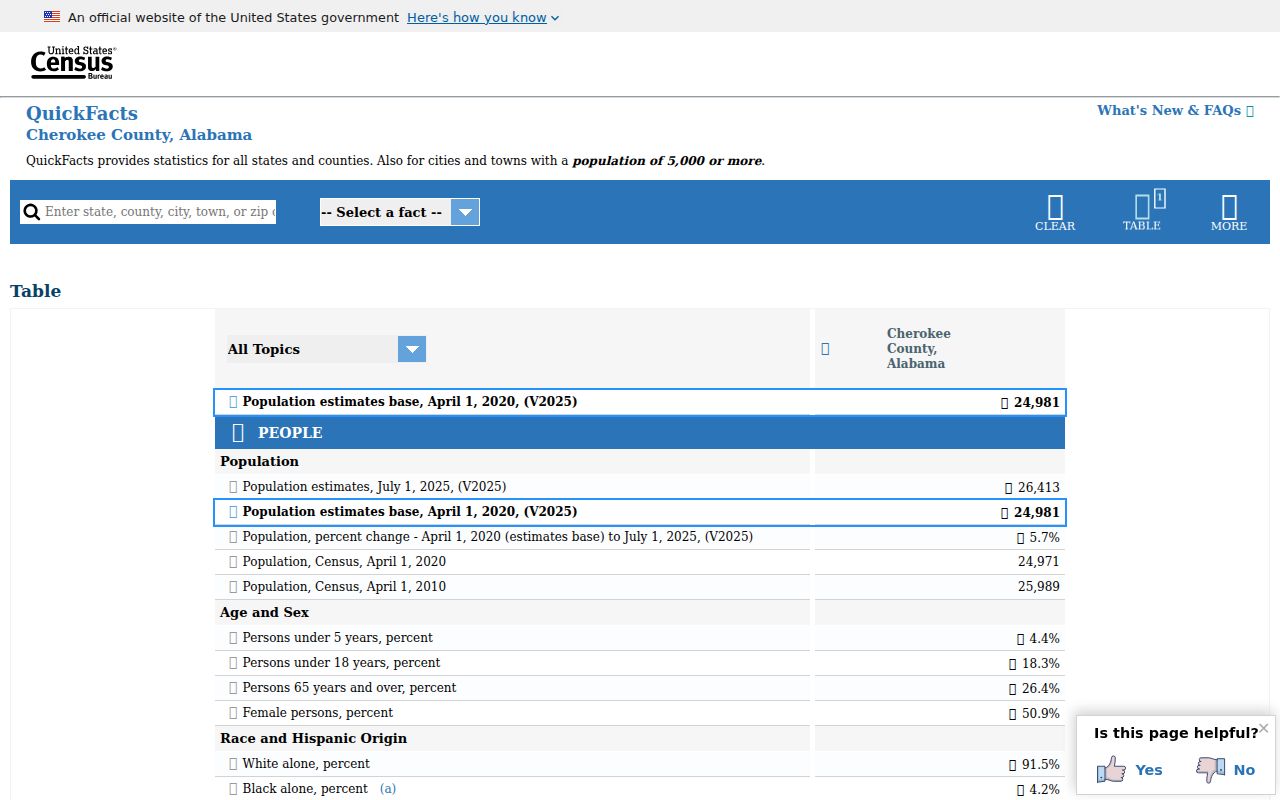
Cherokee County had an estimated 26,413 residents on July 1, 2025. The Census Bureau QuickFacts profile supplies the current population context.
Court filings should not be read as a crime rate. In fiscal year 2021, Alabama court reports recorded 1,401 Circuit Court filings, 70 percent criminal, and 4,805 District Court filings, 27 percent criminal and 56 percent traffic. Those figures show workload and explain why Cherokee County criminal records are split between two trial-court levels. They do not measure how many residents committed crimes.